Understanding Environmental Liability Insurance Costs for Electricians
Schedule a Review Today

Environmental liability insurance protects electricians and contractors from the risks associated with environmental damage claims, such as those stemming from pollution, improper disposal of materials, or hazardous waste incidents. For electricians, this type of insurance is essential to mitigate risks and maintain regulatory compliance. This guide explores the factors that impact environmental liability insurance costs, provides strategies for lowering expenses, and highlights the long-term benefits of this coverage.

The Significance of Environmental Liability Insurance for Electricians

Environmental liability insurance provides critical financial protection against claims related to environmental harm. Electricians working with potentially hazardous materials, such as wiring, solvents, and electrical equipment, may inadvertently cause environmental contamination or pollution. This type of insurance covers costs associated with cleanup, legal fees, and damages, reducing financial strain and safeguarding your business reputation.


The demand for environmental liability insurance has grown as environmental regulations become more stringent. Electricians working in states like California may face higher regulatory requirements, making insurance more crucial. To learn more about state-specific coverage options, explore electrician insurance in California.

Key Factors Influencing Environmental Liability Insurance Costs

Several elements impact the cost of environmental liability insurance for electricians. Understanding these factors can help businesses plan their budget and anticipate changes in premium rates.


  1. Business Size and Scope: Larger operations or those handling high volumes of hazardous materials typically have higher premiums due to the increased risk.
  2. Project Types: Electricians working on projects with greater environmental risk, such as industrial sites or large-scale constructions, might pay more for coverage.
  3. Claims History: A history of environmental claims can lead to higher premiums, as insurers view these businesses as higher-risk. Maintaining a clean record with minimal claims may help control costs.
  4. Location: Businesses operating in environmentally sensitive or highly regulated areas may experience higher premiums due to stricter local regulations. For example, electricians working in Texas should review specific requirements for environmental liability insurance in Texas.

Overview of Available Coverage Options

Environmental liability insurance offers various coverage options that electricians can tailor to their needs. These options include:


  • Pollution Liability: Covers third-party claims for property damage or bodily injury caused by pollution events. This option is essential for electricians handling materials that could contaminate the environment.
  • Onsite and Offsite Coverage: Protects against environmental incidents that occur on your business premises or at a job site. Offsite coverage is critical for electricians who frequently work on various project sites.
  • Legal Defense Costs: This coverage handles legal expenses associated with environmental claims, ensuring your business has the resources to respond to lawsuits.


Contractors handling high-value equipment or materials might also consider adding inland marine insurance to protect against loss or damage to tools in transit, especially if their work involves multiple locations.

Strategies for Lowering Insurance Expenses

While environmental liability insurance is essential, it can represent a significant cost. Implementing strategies to reduce expenses can help manage premiums effectively.


Adopting Environmental Safety Protocols


Following robust environmental safety practices can reduce the likelihood of incidents, which may help lower your premiums over time. These protocols might include:


  • Proper Waste Disposal: Ensuring that hazardous materials are disposed of correctly to avoid contamination.
  • Spill Prevention Measures: Using containment barriers and spill prevention kits to mitigate potential environmental damage on job sites.


For electricians in high-risk areas, pollution liability insurance can provide additional protection while demonstrating to insurers that you take environmental responsibility seriously.


Training and Educating Employees on Safety Practices


Investing in employee training ensures that your team understands best practices for handling hazardous materials safely. Effective training covers:


  • Proper Use of Protective Equipment (PPE): Reinforcing the importance of PPE when working with materials that could pose environmental risks.
  • Emergency Response Plans: Training employees on how to handle spills or other incidents effectively.


For businesses with extensive on-site equipment, such as HVAC contractors, contractors' equipment insurance is also advisable to cover any damage resulting from environmental accidents.


Periodic Review and Update of Insurance Policies


Regularly reviewing your insurance policies allows you to identify areas where you might reduce costs. Reviewing your policy ensures that your coverage aligns with your business’s evolving needs and that you’re not overpaying for unnecessary protections. Conducting a periodic review can also help identify opportunities for additional coverage, such as error and omissions insurance if you provide advisory services that could lead to liability.

The Lasting Advantages of Environmental Liability Insurance

Environmental liability insurance offers more than financial protection—it also supports long-term business growth. By covering the costs of environmental incidents, this insurance provides peace of mind, allowing electricians to take on larger or higher-risk projects with confidence. Furthermore, maintaining environmental liability insurance demonstrates your commitment to environmental stewardship, which can improve your reputation and attract eco-conscious clients.


In addition to liability protection, contractors who frequently transport tools and materials between sites should also consider commercial auto insurance to protect their vehicles and contents against potential losses during transit.

Final Thoughts

Environmental liability insurance is essential for electricians looking to manage environmental risks and comply with regulations. Understanding the factors that influence costs, adopting effective safety protocols, and regularly reviewing policies can help manage expenses while ensuring comprehensive protection. Prioritizing this coverage supports long-term business stability and positions your business as environmentally responsible, providing you with a competitive edge in today’s market. For those interested in more specific coverage needs, explore options for electrician insurance that cover a range of scenarios and liabilities to keep your business protected.

Speak with us today!

We can help you with any of your contractor insurance needs!

Latest Posts

by Behr 27 May 2026
Mike’s a plumber in Palm Springs. We’d never worked together. He called me out of the blue one day because his longtime broker had just sold his book of business, and the service level fell off a cliff. Nobody was walking him through his claims, and his workers’ comp mod kept creeping higher. On the phone he said, “My workers’ comp mod keeps going up. We’re not a circus. We run a good shop. What am I missing?” We pulled his claims. Same pattern over and over. A guy tweaks his back, strains a shoulder, twists a knee. Mike sends him home to “rest up.” No light duty. No modified role. Just the couch and every Netflix binge imaginable. When that happens, the insurance company doesn’t just pay doctor bills. They start sending that worker checks to replace part of their paycheck while they’re off the job. That’s what really drives the cost of the claim up and pushes your mod higher for years. The medical bills weren’t killing Mike. Paying people to sit at home and watch Netflix and order DoorDash was. Here’s the part most owners never get told plainly. Insurance companies don’t “eat” those costs. They finance them back to you through higher premiums over several years. For every dollar that goes out on a claim, you can easily end up paying two, three, even five dollars back in future premium once your experience mod and rating catch up. That’s exactly what a light duty program is built to stop. You keep the doctor in charge of restrictions. You keep the employee on the job in a safer, easier role. You keep those “you’re not working” checks from dragging on for weeks or months. Same injury. Same medical treatment. Totally different impact on what you pay for workers’ comp. If you don’t have light duty in place, you’re paying for problems you don’t need to have. What a light duty program actually is: A light duty program is a clear, written expectation that: If someone gets hurt, and the doctor says they can work with limits, you will bring them back in a safe, modified role instead of sending them home. For a contractor, that might look like: Shop operations: stocking, inventory, tool control, basic QC Field support: photos, documentation, measurements, punch list follow up Safety and fleet: vehicle checks, ladder checks, PPE, simple reporting You’re not inventing busywork. You’re designing real roles that fit restrictions. And when you keep that paycheck on your own payroll instead of handing it to the insurance company to pay as “time off,” you’re not signing up for the most expensive financing arrangement in your business. Five moves to set up a real light duty protocol. Here’s how you put this in place without turning it into a 20 page HR project. 1) Put your stance in writing Decide what you actually believe and make it your standard: “Our default is work, not the couch. If a doctor says an employee can work with restrictions, we will provide safe, modified work that fits those restrictions.” 2) Create 2–3 defined light duty roles Don’t rely on random chores. Build actual roles you can plug people into, like Shop Operations, Field Support, and Safety and Fleet. Each role should have a short list of tasks that can be dialed up or down based on restrictions. 3) Get your clinic aligned with reality Call your preferred clinic and have an adult conversation. Tell them you have real light duty roles. Ask them to give clear restrictions instead of blanket “off work” notes. Make it clear your goal is safe return to work, not cutting corners. If they can’t work with that, you’ve just found a problem bigger than any single claim. 4) Lock in your leadership, not just your crew Foremen and supers can quietly kill light duty if they see it as babysitting. Set the expectation: Light duty is not optional when it’s medically appropriate. Modified duty workers are still part of the team. If there’s a problem, it comes to you, not through sarcasm on the jobsite. 5) Build a one page day of injury playbook The worst time to design a process is in the parking lot after someone gets hurt. Pre decide: Where they go for treatment. Who sends the clinic your light duty roles. Who receives the restrictions and assigns the modified role that same day. One page. Clear steps. No improvising. If this hits a little too close to home, that’s exactly the point. Mike didn’t call me because everything was on fire. He called because his broker sold the book, the service disappeared, and nobody was helping him connect the dots between “no light duty” and a mod that was quietly draining profit. I spend my days in the middle of this: mods, claims, and the quiet ways workers’ comp bleeds margin from good contractors. If you want a second set of eyes on your setup or a light duty plan that actually fits your crew, this is the part I’m very good at. -John Gustafson Call or text me today at (559) 285 3246.
by Behr 23 March 2026
California Workers' Comp Rates Just Went Up for the First Time in a Decade. Here's What Contractors Need to Know.
Man reviewing documents at a desk, construction site visible. White hard hat, laptop, and blueprints present.
by Behr 2 February 2026
Many contractors are surprised by how much a single claim can affect their insurance costs and options. Learn why it happens and how risk management reduces long-term impact.
by Behr 2 February 2026
As a contractor, you’re used to managing overhead, but nothing is quite as frustrating as an unexpected bill after a Workers' Comp Audit. We recently helped one of our plumbing clients navigate a complex audit dispute. The initial result was an additional premium bill of $10,220.38. By the time we were finished fighting for them, that bill was lowered by $9,140! Here is how it happened and how you can prevent the same thing from happening to your business. The "Highest Rate" Trap During the audit, the insurance carrier moved all of the client's payroll to a secondary location that carried significantly higher rates. When we asked why, the auditor’s response was simple: since they didn't have specific employee locations, they defaulted everything to the location with the highest rate. The Reality: Standard industry rules (such as those from the WCIRB) state that payroll should be assigned to the location from which employees are actually dispatched or report for work. It shouldn't be based on which location is the most expensive for the carrier. The "CEO in the Field" Error Another common mistake we found was that the auditor had classified the company's CEO as a field worker. Despite the client explaining multiple times that the CEO only worked in the office, the auditor didn't make the change until we intervened. Moving an executive from a "Plumbing" class code (high risk) to a "Clerical" class code (low risk) can save thousands of dollars in premium. How We Won the Dispute Fighting an audit takes more than just a phone call. It requires persistence and technical knowledge. To get the audit revised, we: Challenged the Auditor: We cited specific industry guidance regarding payroll allocation. Provided Granular Data: We worked with the client to pull specific reports from their payroll system to prove exactly where work was being performed. Escalated the Issue: When the auditor initially refused to budge, we took the fight to the underwriting team and the audit dispute department. The Result The carrier finally admitted the error and confirmed the audit was being revised. The client's additional premium was slashed, saving them $9,140. Don’t Just Pay the Bill If you just received a "Final Audit" notice with a large balance due, don't assume the auditor is right. Auditors are human, and they often default to the highest possible cost for the insured when data is unclear. At Contractor Insurance Pros , we don't just sell you a policy and disappear. We are your partners during the audit process to ensure you only pay exactly what you owe. Want us to take a second look at your last audit?
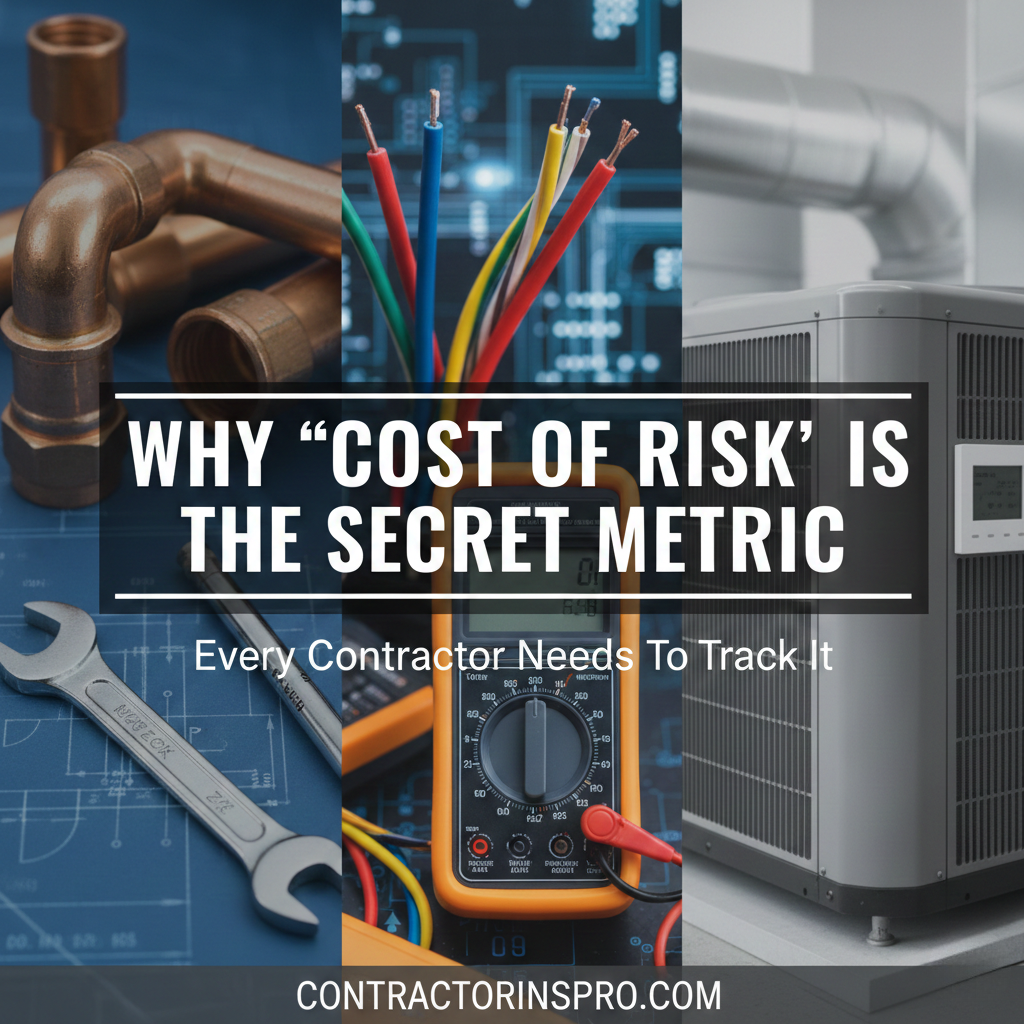
A professional graphic for ContractorInsPro featuring a collage of plumbing pipes, electrical wiring
by Behr 21 January 2026
Stop treating insurance as just a bill. Learn how plumbing, electrical, and HVAC contractors use the 'Cost of Risk' metric to lower expenses and increase net income. Read more at ContractorInsPro.
A general contractor in a hard hat and safety vest on a construction site, looking at a tablet that
by Behr 15 January 2026
Discover Q4 2025 insurance trends for contractors. Learn how property values, liability risks, and new EPL claims will impact your 2026 renewals.
How to Get Proof of Insurance as a General Contractor
by jbehr 21 November 2025
Contractor Insurance Pros helps general contractors secure and manage proof of insurance, stay compliant, and protect their business nationwide.
Insurance Requirements for General Contractors Explained
by jbehr 21 November 2025
Protect your construction business with the right insurance. General, professional, workers’ comp & builder’s risk coverage explained.
How the Rise of Smart Homes Impacts Contractor Insurance Needs
by jbehr 27 December 2024
Protect your smart home contracting business with tailored insurance: Cyber Liability, Professional Liability, Workers’ Comp, and more. Learn how today!
Insurance for Solar Installation Contractors: What Coverage Do You Need?
by jbehr 27 December 2024
Protect your solar installation business with tailored insurance: General Liability, Workers’ Comp, Equipment, and Professional Liability. Learn more today!
Show More
by Behr 27 May 2026
Mike’s a plumber in Palm Springs. We’d never worked together. He called me out of the blue one day because his longtime broker had just sold his book of business, and the service level fell off a cliff. Nobody was walking him through his claims, and his workers’ comp mod kept creeping higher. On the phone he said, “My workers’ comp mod keeps going up. We’re not a circus. We run a good shop. What am I missing?” We pulled his claims. Same pattern over and over. A guy tweaks his back, strains a shoulder, twists a knee. Mike sends him home to “rest up.” No light duty. No modified role. Just the couch and every Netflix binge imaginable. When that happens, the insurance company doesn’t just pay doctor bills. They start sending that worker checks to replace part of their paycheck while they’re off the job. That’s what really drives the cost of the claim up and pushes your mod higher for years. The medical bills weren’t killing Mike. Paying people to sit at home and watch Netflix and order DoorDash was. Here’s the part most owners never get told plainly. Insurance companies don’t “eat” those costs. They finance them back to you through higher premiums over several years. For every dollar that goes out on a claim, you can easily end up paying two, three, even five dollars back in future premium once your experience mod and rating catch up. That’s exactly what a light duty program is built to stop. You keep the doctor in charge of restrictions. You keep the employee on the job in a safer, easier role. You keep those “you’re not working” checks from dragging on for weeks or months. Same injury. Same medical treatment. Totally different impact on what you pay for workers’ comp. If you don’t have light duty in place, you’re paying for problems you don’t need to have. What a light duty program actually is: A light duty program is a clear, written expectation that: If someone gets hurt, and the doctor says they can work with limits, you will bring them back in a safe, modified role instead of sending them home. For a contractor, that might look like: Shop operations: stocking, inventory, tool control, basic QC Field support: photos, documentation, measurements, punch list follow up Safety and fleet: vehicle checks, ladder checks, PPE, simple reporting You’re not inventing busywork. You’re designing real roles that fit restrictions. And when you keep that paycheck on your own payroll instead of handing it to the insurance company to pay as “time off,” you’re not signing up for the most expensive financing arrangement in your business. Five moves to set up a real light duty protocol. Here’s how you put this in place without turning it into a 20 page HR project. 1) Put your stance in writing Decide what you actually believe and make it your standard: “Our default is work, not the couch. If a doctor says an employee can work with restrictions, we will provide safe, modified work that fits those restrictions.” 2) Create 2–3 defined light duty roles Don’t rely on random chores. Build actual roles you can plug people into, like Shop Operations, Field Support, and Safety and Fleet. Each role should have a short list of tasks that can be dialed up or down based on restrictions. 3) Get your clinic aligned with reality Call your preferred clinic and have an adult conversation. Tell them you have real light duty roles. Ask them to give clear restrictions instead of blanket “off work” notes. Make it clear your goal is safe return to work, not cutting corners. If they can’t work with that, you’ve just found a problem bigger than any single claim. 4) Lock in your leadership, not just your crew Foremen and supers can quietly kill light duty if they see it as babysitting. Set the expectation: Light duty is not optional when it’s medically appropriate. Modified duty workers are still part of the team. If there’s a problem, it comes to you, not through sarcasm on the jobsite. 5) Build a one page day of injury playbook The worst time to design a process is in the parking lot after someone gets hurt. Pre decide: Where they go for treatment. Who sends the clinic your light duty roles. Who receives the restrictions and assigns the modified role that same day. One page. Clear steps. No improvising. If this hits a little too close to home, that’s exactly the point. Mike didn’t call me because everything was on fire. He called because his broker sold the book, the service disappeared, and nobody was helping him connect the dots between “no light duty” and a mod that was quietly draining profit. I spend my days in the middle of this: mods, claims, and the quiet ways workers’ comp bleeds margin from good contractors. If you want a second set of eyes on your setup or a light duty plan that actually fits your crew, this is the part I’m very good at. -John Gustafson Call or text me today at (559) 285 3246.
by Behr 23 March 2026
California Workers' Comp Rates Just Went Up for the First Time in a Decade. Here's What Contractors Need to Know.
Man reviewing documents at a desk, construction site visible. White hard hat, laptop, and blueprints present.
by Behr 2 February 2026
Many contractors are surprised by how much a single claim can affect their insurance costs and options. Learn why it happens and how risk management reduces long-term impact.
by Behr 2 February 2026
As a contractor, you’re used to managing overhead, but nothing is quite as frustrating as an unexpected bill after a Workers' Comp Audit. We recently helped one of our plumbing clients navigate a complex audit dispute. The initial result was an additional premium bill of $10,220.38. By the time we were finished fighting for them, that bill was lowered by $9,140! Here is how it happened and how you can prevent the same thing from happening to your business. The "Highest Rate" Trap During the audit, the insurance carrier moved all of the client's payroll to a secondary location that carried significantly higher rates. When we asked why, the auditor’s response was simple: since they didn't have specific employee locations, they defaulted everything to the location with the highest rate. The Reality: Standard industry rules (such as those from the WCIRB) state that payroll should be assigned to the location from which employees are actually dispatched or report for work. It shouldn't be based on which location is the most expensive for the carrier. The "CEO in the Field" Error Another common mistake we found was that the auditor had classified the company's CEO as a field worker. Despite the client explaining multiple times that the CEO only worked in the office, the auditor didn't make the change until we intervened. Moving an executive from a "Plumbing" class code (high risk) to a "Clerical" class code (low risk) can save thousands of dollars in premium. How We Won the Dispute Fighting an audit takes more than just a phone call. It requires persistence and technical knowledge. To get the audit revised, we: Challenged the Auditor: We cited specific industry guidance regarding payroll allocation. Provided Granular Data: We worked with the client to pull specific reports from their payroll system to prove exactly where work was being performed. Escalated the Issue: When the auditor initially refused to budge, we took the fight to the underwriting team and the audit dispute department. The Result The carrier finally admitted the error and confirmed the audit was being revised. The client's additional premium was slashed, saving them $9,140. Don’t Just Pay the Bill If you just received a "Final Audit" notice with a large balance due, don't assume the auditor is right. Auditors are human, and they often default to the highest possible cost for the insured when data is unclear. At Contractor Insurance Pros , we don't just sell you a policy and disappear. We are your partners during the audit process to ensure you only pay exactly what you owe. Want us to take a second look at your last audit?
A professional graphic for ContractorInsPro featuring a collage of plumbing pipes, electrical wiring
by Behr 21 January 2026
Stop treating insurance as just a bill. Learn how plumbing, electrical, and HVAC contractors use the 'Cost of Risk' metric to lower expenses and increase net income. Read more at ContractorInsPro.
A general contractor in a hard hat and safety vest on a construction site, looking at a tablet that
by Behr 15 January 2026
Discover Q4 2025 insurance trends for contractors. Learn how property values, liability risks, and new EPL claims will impact your 2026 renewals.
How to Get Proof of Insurance as a General Contractor
by jbehr 21 November 2025
Contractor Insurance Pros helps general contractors secure and manage proof of insurance, stay compliant, and protect their business nationwide.
Insurance Requirements for General Contractors Explained
by jbehr 21 November 2025
Protect your construction business with the right insurance. General, professional, workers’ comp & builder’s risk coverage explained.
How the Rise of Smart Homes Impacts Contractor Insurance Needs
by jbehr 27 December 2024
Protect your smart home contracting business with tailored insurance: Cyber Liability, Professional Liability, Workers’ Comp, and more. Learn how today!
Insurance for Solar Installation Contractors: What Coverage Do You Need?
by jbehr 27 December 2024
Protect your solar installation business with tailored insurance: General Liability, Workers’ Comp, Equipment, and Professional Liability. Learn more today!